
Термин «кератинизация» (ороговение) обозначает процесс, в результате которого клетки эпидермиса подвергаются дифференциации, начиная от базальных кератиноцитов и заканчивая высокоспециализированными корнеоцитами. В результате формируется прочный гидрофобный, но биохимически активный верхний (роговой) слой эпидермиса, имеющий структуру «раствор и кирпичи», где корнеоциты выступают в роли кирпичей, расположенных между слоями липидов и выполняющих функцию «раствора».
Роговой слой служит основным барьером между организмом и окружающей средой. Он поддерживает водный баланс, предотвращая избыточную потерю влаги, и защищает организм от патогенов, токсинов и механических повреждений.
Нарушение целостности кожного барьера (т.е. рогового слоя) стимулирует восстановление эпидермиса, включая увеличение выработки липидов. В дальнейшем это приводит к гиперплазии эпидермиса – увеличению числа клеток, которые также усиливают продукцию липидов. В результате восстанавливается гидрофобность рогового слоя. Сопутствующий воспалительный процесс может развиваться как дополнительный защитный механизм против патогенов, однако часто он усугубляет повреждение кожного барьера.
Нарушения кератинизации являются одной из причин повреждения кожного барьера. Эти патологические изменения подразделяются на первичные и вторичные и клинически проявляются в основном чрезмерным шелушением кожи.
При первичных нарушениях клинические признаки обусловлены прямым дефектом одного или нескольких этапов формирования рогового слоя. Известные дефекты связаны с мутациями в генах, которые кодируют структурные белки, формирующие корнеоцит (например, трансглутаминазы), или ферменты, участвующие в образовании или транспорте липидов1.
Вторичные нарушения характеризуются чрезмерным шелушением, возникающим вследствие другого заболевания (например, саркоптоза, гипотиреоза, эпителиотропной лимфомы и других). Более 80% нарушений кератинизации обусловлены вторичными причинами1.
Ихтиоз (от греч. ἰχθύς «рыба») – это группа генетически обусловленных заболеваний кожи, которые связаны с первичными нарушениями кератинизации и характеризуются сухостью, утолщением и шелушением кожи. При этом поверхность вовлеченной кожи напоминает рыбью чешую.
В ветеринарной медицине термин «ихтиоз» используется для обозначения редких врожденных или наследственных заболеваний, которые, как считается, обусловлены первичными дефектами формирования рогового слоя кожи2. Врожденные ихтиозы были зарегистрированы у людей, собак, кошек, коров, овец, кур, свиней, лабораторных мышей и лам.
Диагноз «ихтиоз» может быть поставлен на основании анамнеза, результатов подробного дерматологического обследования и гистологического исследования кожи. Для собак многих пород существуют генетические тесты, существенно облегчающие диагностику данного заболевания.
На сегодняшний день ихтиоз у собак подразделяется на эпидермолитическую и неэпидермолитическую формы на основе гистопатологических особенностей3.
Эпидермолитический ихтиоз (также известный как эпидермолитический гиперкератоз) представляет собой дерматологическое заболевание, обусловленное нарушением синтеза кератина. Гистопатологическое исследование кожи при данном состоянии выявляет сочетание акантоза с гиперкератозом, цитолиз в зернистом слое и крупные кератогиалиновые гранулы. Кератиноциты часто содержат эозинофильные перинуклеарные тельца, представляющие собой скопления кератиновых филаментов4. Эпидермолитический ихтиоз хорошо изучен у норфолк-терьеров, является аутосомно-рецессивным заболеванием и вызывается мутацией в эпидермальном кератине (KRT10)5,6. Это состояние спорадически отмечалось и у представителей других пород7,8. У больных собак наблюдаются множественные очаги алопеции с гиперпигментацией и шелушением кожи, склонность к вторичной инфекции.
На текущий момент неэпидермолитические формы ихтиоза, описанные у собак, являются преимущественно аутосомно-рецессивными по типу наследования. Различные мутации, затрагивающие липиды и структурные белки, вызывают сходные клинические изменения и гистологические особенности. Характерными признаками неэпидермолитического ихтиоза в основном являются выраженный пластинчатый ортокератотический гиперкератоз и слабовыраженный акантоз.
Ихтиоз у собак обычно проявляется неэпидермолитической формой и имеет ярко выраженную породную предрасположенность. Ранее данная форма ихтиоза была зарегистрирована у собак таких пород, как золотистый ретривер9,10, американский бульдог11,12, джек-рассел-терьер13,14, кавалер-кинг-чарльз-спаниель15, а также у представителей других пород и их помесей16-19.
Большинство зарегистрированных случаев ихтиоза имеют общие клинические и микроскопические признаки, хотя симптомы зачастую различаются в зависимости от породы (табл. 1).
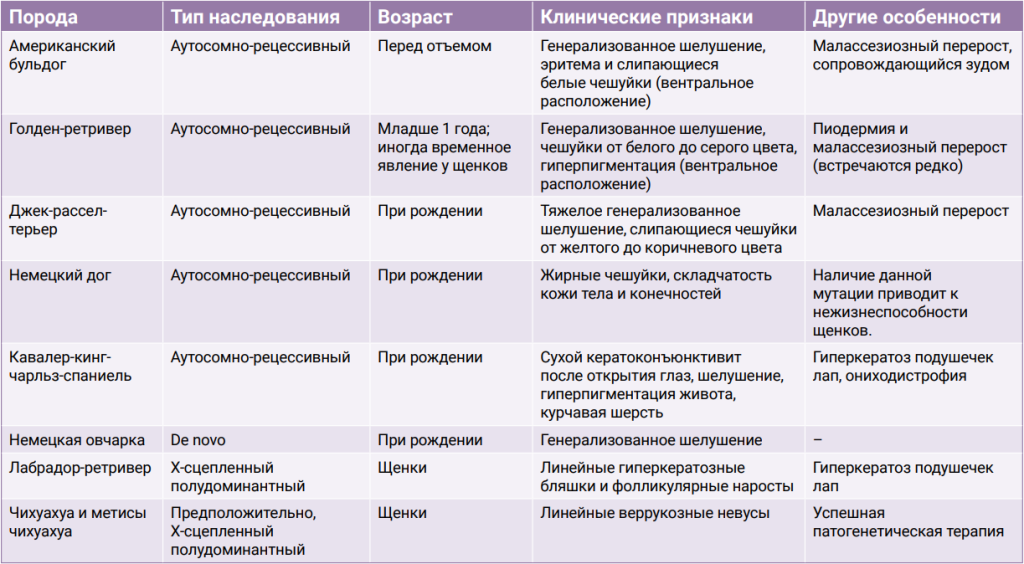
В данной статье описывается неэпидермолитический ихтиоз у самки породы ка-де-бо. Насколько известно автору, ранее у представителей данной породы ихтиоз описан не был.
Клинический случай
В клинику поступила интактная самка породы ка-де-бо в возрасте 10 месяцев с жалобами владельцев на шелушение кожи, проявляющееся с раннего возраста. У родителей и однопометников животного подобных поражений не отмечалось.При клиническом осмотре пациента были выявлены генерализованные эксфолиации с крупными серыми чешуйками, хорошо заметными на спине и вентральной части тела (фото 1, 2).
В паховой области и на животе наблюдались единичные папулы, а при отоскопии было обнаружено значительное количество сухого серо-коричневого содержимого, затрудняющего осмотр слухового прохода (фото 3).
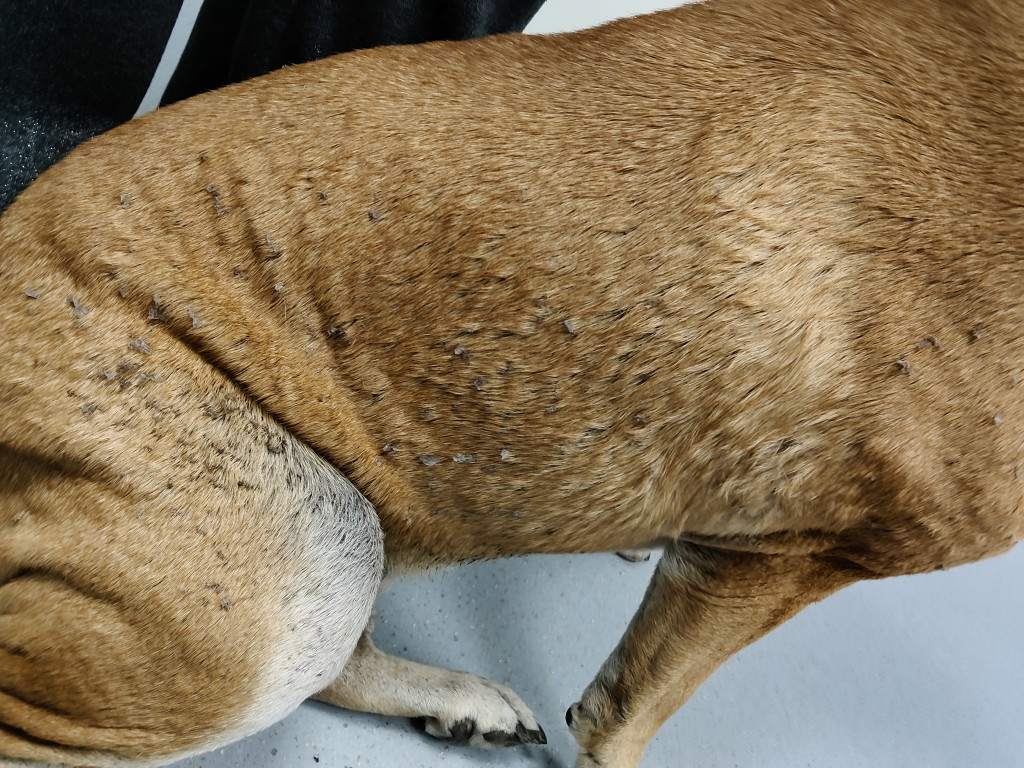
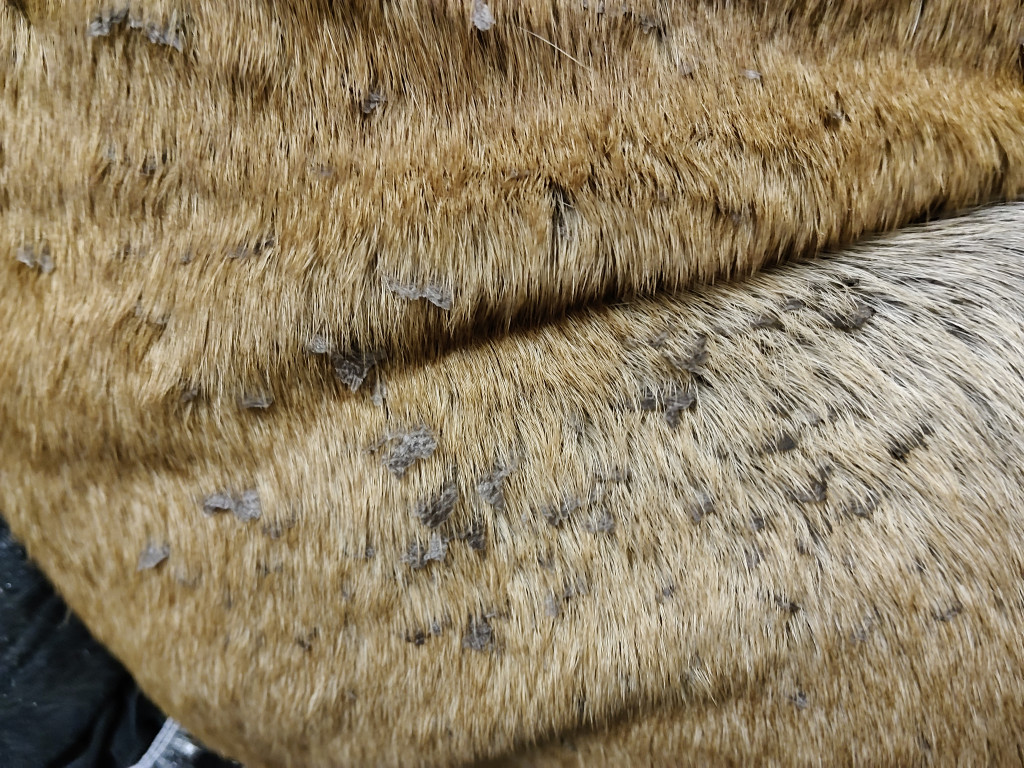
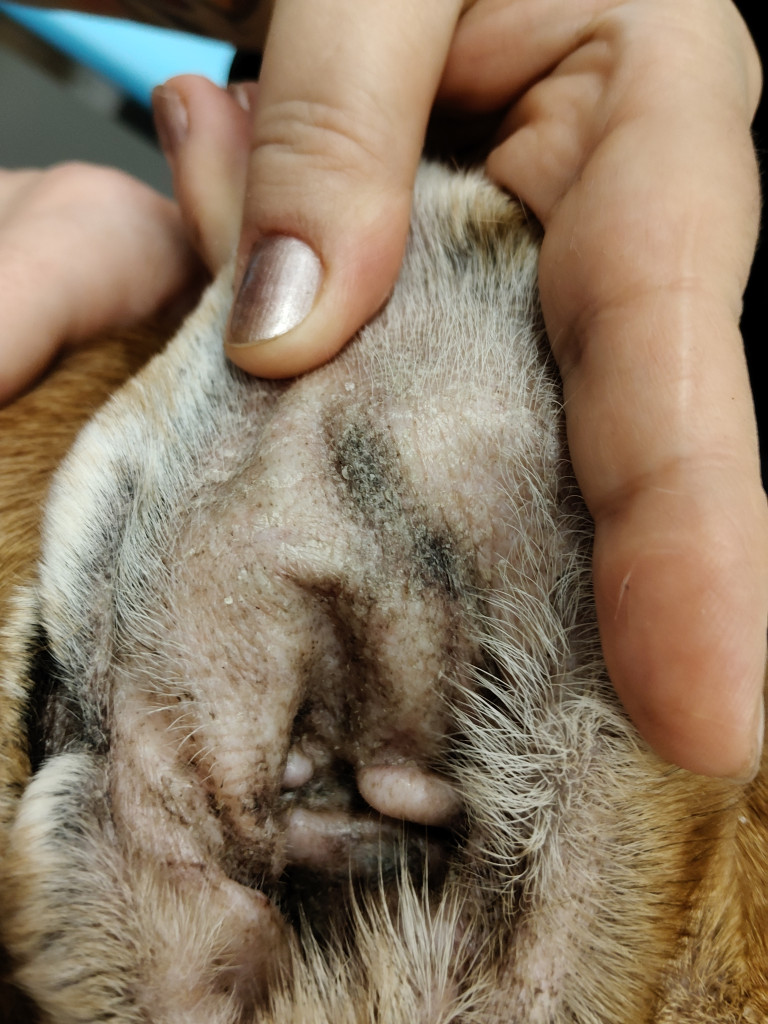
Диагностика. Результаты поверхностных и глубоких соскобов на наличие эктопаразитов были отрицательными. Цитологическое исследование выявило повышенное количество дрожжеподобных грибов рода Malassesia как на коже вентральной поверхности тела, так и в слуховом проходе без признаков воспаления (малассезиозный перерост).
Сильное шелушение характерно для ряда заболеваний, включая себаденит, атопический дерматит, паразитарные и протозойные заболевания (хейлетиеллез, демодекоз, лейшманиоз), а также гипотиреоз, эпителиотропную кожную лимфому или метаболические заболевания (например, цинк-зависимый дерматоз). В связи с этим для уточнения диагноза, помимо рутинных дерматологических тестов, зачастую требуется проведение биопсии кожи.
Результат гистопатологического исследования биопсийного материала у данного пациента показал умеренное утолщение эпидермиса ввиду ортокератозного гиперкератоза. Кератиновый слой нередко простирается до устья волосяных фолликулов и частично заполняет волосяные фолликулы.
Таким образом, был поставлен морфологический диагноз «компактный умеренный эпидермальный гиперкератоз».
Клинические проявления данного случая, характеризующиеся генерализованным шелушением без признаков зуда с раннего возраста, указывают на первичные нарушения ороговения. Такие симптомы характерны, в частности, для ихтиоза. Аналогичные гистопатологические изменения ранее были описаны у других чистокровных пород собак с неэпидермолитическим ихтиозом.
В совокупности результаты осмотра, стандартных дерматологических тестов и гистологического исследования позволили поставить клинический диагноз «ихтиоз».
Лечение
Целью терапии при ихтиозе, равно как и при других нарушениях кератинизации, является восстановление барьерной функции рогового слоя кожи и снижение приспособительных реакций кожи, таких как гиперплазия, гиперкератоз, воспаление.Терапия должна быть индивидуальной для каждого пациента, поэтому необходимо эффективное взаимодействие с владельцем для строгого соблюдения им рекомендаций. Также очень важно объяснить владельцу, что заболевание является хроническим и может усугубляться с возрастом. Поскольку такие животные склонны к возникновению вторичной инфекции, осмотры должны быть регулярными, а терапия при появлении признаков инфекции – своевременной.
На сегодняшний день местная терапия остается методом выбора при всех формах ихтиоза1. Она может включать кератолитические средства для удаления избыточного количества чешуек, такие как шампуни с серой и салициловой кислотой.
Для восстановления кожного барьера (с целью предотвращения потери влаги) используются увлажняющие/смягчающие средства в виде пенок, спреев, шампуней и масляных препаратов в форме спот-он. Хорошо зарекомендовали себя препараты на основе церамидов14, средства с молочной кислотой, 50%-ный раствор пропиленгликоля20 и средства с глюконолактоном21.
Местные антимикробные препараты (например, хлоргексидин и миконазол в форме шампуней) показаны при вторичных бактериальных или грибковых инфекциях. Однако следует проявлять осторожность, чтобы избежать дальнейшего повреждения кожного барьера в результате применения агрессивных местных средств, например шампуней с березовым дегтем или бензоила пероксидом1. Обычно назначаются местные средства с использованием 1–2 раза в неделю и постепенным уменьшением кратности применения по мере снижения количества чешуек.
Системная терапия при ихтиозе используется значительно реже. Препараты ретиноевой кислоты могут быть эффективными22, однако часто для достижения эффекта требуется их длительное применение и не все собаки хорошо переносят лечение. Пероральный прием омега-3 и омега-6 жирных кислот также может быть полезен, но истинную эффективность этих препаратов трудно оценить. Пациентам с генерализованным малассезиозным дерматитом может потребоваться системная противогрибковая терапия азолами. Кортикостероиды могут временно уменьшить шелушение, однако их длительное применение еще больше повреждает кожный барьер.
В качестве терапии для данного пациента были рекомендованы гигиенические лосьоны для ушей, содержащие сквалан, шампунь с серой и салициловой кислотой, шампунь с фитосфингозином и системно омега-3 в составе лососевого масла. В течение трех лет наблюдений за пациентом случаев вторичной инфекции или иных осложнений не наблюдалось.
Заключение
Первичные нарушения кератинизации, включая ихтиоз, обычно диагностируются путем исключения всех вторичных причин. Сбор подробного анамнеза, включая возраст животного при возникновении заболевания и наличие или отсутствие зуда, позволяет составить список дифференциальных диагнозов и выбрать оптимальный диагностический подход.В повседневной ветеринарной практике стандартные диагностические исследования (например, соскобы кожи, мазки-отпечатки, трихограмма, посев на дерматофиты), наряду с рутинными анализами крови, помогают исключить большинство вторичных заболеваний, связанных с нарушениями кератинизации. Однако для постановки окончательного диагноза часто необходимо проведение биопсии кожи.
Первичные нарушения кератинизации, как правило, не сопровождаются зудом (если не осложнены вторичными инфекциями) и возникают у молодых животных, но иногда встречаются случаи, когда симптомы манифестируют в более позднем возрасте. Ихтиоз характеризуется выраженной породной предрасположенностью, однако необходимо учитывать, что спонтанные мутации могут возникать у собак любой породы или у метисов.
Список литературы:
- Mauldin E.A. Canine ichthyosis and related disorders of cornification. Vet Clin North Am Small Anim Pract. 2013 Jan; 43(1):89-97.
- Mauldin E.A., Elias P.M. Ichthyosis and hereditary cornification disorders in dogs. Vet Dermatol 2021; 32: 567–e154.
- Credille K.M. Primary cornification defects. In: Guague`re E, Pre´laud P, editors. A practical guide to canine dermatology. Paris: Kalianxis; 2008.
- Bergman R., Khamaysi Z., Sprecher E. A unique pattern of dyskeratosis characterizes epidermolytic hyperkeratosis and epidermolytic palmoplantar keratoderma. Am J Dermatopathol 2008.
- Barnhart K.F., Credille K.M, Ambrus S., et al. A heritable keratinization defect of the superficial epidermis in Norfolk terrier dogs. J Comp Pathol 2004; 130:246–54.
- Credille K.M., Barnhart K.F., Minor J.S., et al. Mild recessive epidermolytic hyperkeratosis associated with a novel keratin 10 donor splice-site mutation in a family of Norfolk terrier dogs. Br J Dermatol. 2005.
- Mecklenburg L., Hetzel U., Ueberschar S. Epidermolytic ichthyosis in a dog: clinical, histopathological, immunohistochemical and ultrastructural findings. J Comp Pathol 2000.
- Kiener S., Ahman S., Jagannathan V., et al. Heterozygous KRT10 missense variant in a Chihuahua with severe epidermolytic ichthyosis. Anim Genet. 2023 Oct; 54(5):652-654.
- Grall A., Guaguere E., Planchais S., et al. PNPLA1 mutations cause autosomal recessive congenital ichthyosis in golden retriever dogs and humans. Nat Genet 2012; 44: 140–147.
- Roethig A., Schildt K.J., Welle M.M., et al. Is "milk crust" a transient form of golden retriever ichthyosis? Vet Dermatol 2015; 26: 265-e257.
- Casal M.L., Wang P., Mauldin E.A., et al. A defect in NIPAL4 Is associated with autosomal recessive congenital ichthyosis in american bulldogs. PLoS One 2017; 12: e0170708.
- Mauldin E.A., Wang P., Evans E., et al. Autosomal recessive congenital ichthyosis in American bulldogs is associated with NIPAL4 (ICHTHYIN) deficiency. Vet Pathol 2015; 52: 654–662.
- Credille K.M., Minor J.S., Barnhart K.F., et al. Transglutaminase 1-deficient recessive lamellar ichthyosis associated with a LINE-1 insertion in Jack Russell terrier dogs. Br J Dermatol 2009; 161:265–272.
- Mauldin E., Bradley C., Casal M., et al. Skin barrier, phenotypic and genotypic characterisation of autosomal recessive ichthyosis in TGM1-deficient Jack Russell Terriers and response to topical ceramide. Vet Dermatol. 2024 Dec; 35(6):617-625.
- Hartley C., Donaldson D., Smith K.C., et al. Congenital keratoconjunctivitis sicca and ichthyosiform dermatosis in 25 Cavalier King Charles spaniel dogs–part I: clinical signs, histopathology, and inheritance. Vet Ophthalmol 2012;15: 327–32.
- Kiener S., Castilla E., Jagannathan V., et al. SDR9C7 missense variant in a Chihuahua with non-epidermolytic ichthyosis. Anim Genet. 2023 Aug; 54(4):562-565.
- Rietmann S., Clegg J.L., Jagannathan V., et al. Intragenic PNPLA1 duplication in Labrador retrievers with nonepidermolytic ichthyosis. Vet Dermatol. 2025 Jun; 36(3):314-320.
- Affolter V.K., Kiener S., Jagannathan V., et al. A de novo variant in the keratin 1 gene (KRT1) in a Chinese shar-pei dog with severe congenital cornification disorder and non-epidermolytic ichthyosis. PLoS One. 2022 Oct 17; 17(10):e0275367.
- Kiener S., Ahman S., Cikota R., et al. Heterozygous ASPRV1 frameshift variant in a Pembroke Welsh Corgi with ichthyosis. Anim Genet. 2024 Jun; 55(3):490-492.
- Scott D.W., Miller W.H., Griffin C.E.. Muller and Kirk’s small animal dermatology. 7th ed. Philadelphia, PA, USA: W. B. Saunders; 2013. p.579.
- Puigdemont A., Furiani N., De Lucia M., et al. Topical polyhydroxy acid treatment for autosomal recessive congenital ichthyosis in the golden retriever: a prospective pilot study. Vet Dermatol 2018; 29: 323-e113.
- Petak A., Šoštarić-Zuckermann I.C., Hohšteter M., Lemo N. Isotretinoin treatment for autosomal recessive congenital ichthyosis in a Golden Retriever. Vet Sci. 2022 Feb 22; 9(3):97.
 vetpeterburg
 Ветеринарный Петербург